

Jewish Law
What Blessing Do You Say on Sfenj and Fried Bread? A Halachic Guide
Learn the proper blessings for fried dough, couscous, and fried bread according to Rabbi Ovadia Yosef, along with an explanation of the Jewish dietary laws of kashrut
- Hidabroot
- | Updated
Two daily halachos from BeHalacha U'VeAggadah, based on the rulings of Rabbi Ovadia Yosef.
What Blessing Is Recited on Sfenj?
The rule previously discussed, that someone who eats 216 grams of grain-based food must recite Hamotzi before eating and Birkat Hamazon afterward, applies specifically to baked grain products. However, when eating cooked grain-based foods, such as noodles or couscous, or fried dough products, such as doughnuts, zalabia, and sfenj, the blessings remain Mezonot before eating and Al Hamichya afterward, even when consuming a very large quantity.
If someone mistakenly recites Hamotzi Lechem Min Haaretz over a cooked grain dish, such as noodles or couscous, the blessing is not valid because the food does not have the status of bread. The person must therefore recite Mezonot. However, if someone mistakenly recites Birkat Hamazon after eating such a dish, the obligation has been fulfilled, since these foods are filling and Birkat Hamazon can serve as a valid concluding blessing.
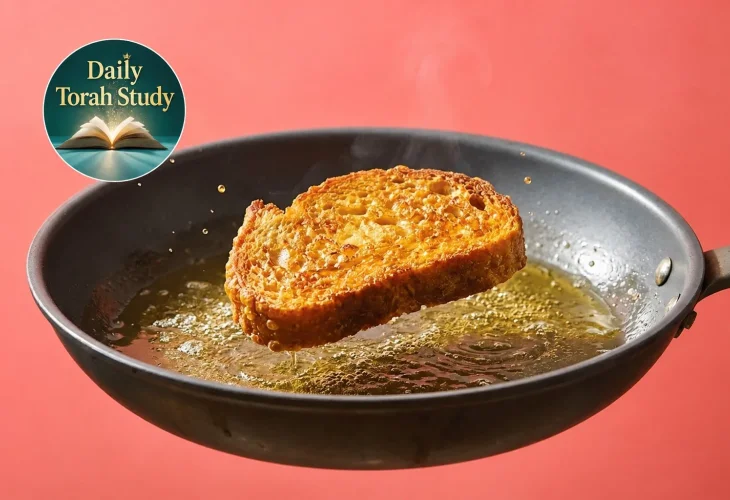
What Blessing Is Recited on Fried Bread?
When a slice of bread smaller than a kezayit (an olive-sized portion) is fried in oil, the blessing recited before eating it is Mezonot. If several pieces are eaten and their combined quantity amounts to a kezayit, the concluding blessing is Al Hamichya. Even if a person eats a meal-sized quantity of these fried bread pieces, equivalent to 216 grams, the blessings remain Mezonot and Al Hamichya.
However, if the fried slice of bread is at least a kezayit in size, the appropriate blessings are Hamotzi before eating and Birkat Hamazon afterward.
Daily Jewish Concept: Kashrut
Kashrut, the Jewish dietary laws, is a comprehensive system of halachic regulations that determines which foods are permitted (kosher) and which are forbidden (treif). These laws include specific identifying characteristics of kosher animals, such as split hooves and chewing the cud in land mammals, and fins and scales in fish. Kashrut also prohibits the consumption of blood and requires strict separation between meat and dairy products, including their ingredients, preparation, cooking utensils, and equipment.
For meat to be considered kosher, an animal must belong to a permitted species and undergo proper Jewish ritual slaughter, known as shechita. The animal must also meet the halachic requirements that determine whether it is free of conditions that would render it a treifa.
In modern food production, maintaining kosher standards requires careful supervision of ingredients, manufacturing processes, and food preparation in commercial kitchens and industrial facilities. This supervision is carried out by trained kosher supervisors, known as mashgichim, who monitor compliance with halachic requirements and oversee the certification process. Products and establishments that meet the necessary standards may receive official kosher certification, helping consumers identify foods prepared in accordance with Jewish dietary law.
 Jewish LawSweet Bread Rolls: What Blessing Should You Say? Plus a Lesson on Trusting Hashem
 Jewish LawDaily Halacha: When Does Cake Require Hamotzi? Plus the Life-Saving Power of Charity
 Jewish LawMezonot or Hamotzi? The Blessing on Sweet Bread and a Lesson in Fairness
 Jewish LawWhat Blessing Do You Say on Pizza? Jewish Laws of Food and Free Will

