

Personal Stories
“Hashem Sent Us Diamonds”: A Mother Raising Four Children With Special Needs Shares Her Story
Shoshi Kretz opens up about raising four children with special needs, the challenges of living with a rare genetic disorder, and how faith, gratitude, and resilience give her strength
- Moriah Luz
- | Updated
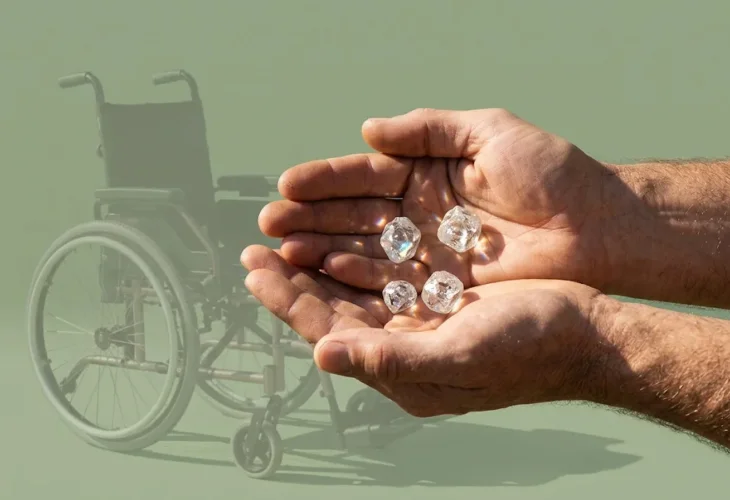
"Hashem sent us diamonds." These are the words Shoshi Kretz uses when I ask her about her children. Four of her six children have special needs, and her days are filled with responsibilities that would overwhelm many people. Between accompanying one of her daughters to a medical appointment, working as a mikvah attendant, and stopping by two weddings to offer congratulations as part of her role as a Chabad emissary in Afula, she somehow finds time for our conversation.
Kretz, 44, married her husband, Rabbi Levi, when she was just 18 and a half. Less than a year later, she gave birth to their eldest daughter, Miriam, now 24. "Miriam was born with developmental delays, but we didn't realize it at first. The warning signs weren't immediately apparent. When I noticed that her development had stalled, we began looking for medical answers." Miriam underwent various therapies, attended a special education kindergarten, and later spent five years in special education classes. Yet despite these interventions, doctors were unable to determine the underlying cause of her difficulties.
Meanwhile, Shoshi gave birth to three more children in quick succession: Chaya Mushka, now 23; Devorah Leah, 22; and Mendel, 20. Chaya Mushka was born with a cleft lip, which was successfully treated, and she is now healthy. Mendel displayed unusual behavioral patterns for years before receiving a diagnosis of high-functioning autism approximately two years ago. The couple later welcomed two more daughters, Rivka, now 14, and Chana, 12 and a half.
So you spent 14 years without a clear diagnosis for Miriam?
"Yes, and it was incredibly difficult. Whenever I was around other mothers of children with special needs, someone would inevitably ask, 'Why are you here? What's wrong with your daughter?' And I would answer, 'I don't know.' We lived with uncertainty and questions that had no answers."
How did the people around you react?
"That's a good question," she says with a sigh. "Some people, even those close to me, said I was simply looking for problems."
At the time, Shoshi had chosen to stay home and raise her children, leading some acquaintances to assume she had too much free time and was imagining difficulties that did not exist. But she trusted her instincts. "We knew what needed to be done, and we made sure our children received the necessary care. I wasn't looking for problems. The problems were real, and I was addressing them rather than sweeping them under the rug."
When Miriam turned 14, the family finally received an answer. After years of medical investigations, doctors diagnosed her with an extremely rare genetic disorder affecting her muscles. Separately, Miriam was also diagnosed with high-functioning autism. The genetic diagnosis prompted doctors to examine the couple's other children, leading to another devastating discovery: Rivka and Chana had the same condition.
"At the time, there were only 13 known cases worldwide, and three of them were in our family," Shoshi says. "Bonus after bonus after bonus. Even the medical world proved that we're an extraordinary family." She speaks with remarkable energy, without a trace of self-pity. Because the condition was so rare, she explains, it had not been included in the genetic screening she and her husband underwent before marriage.
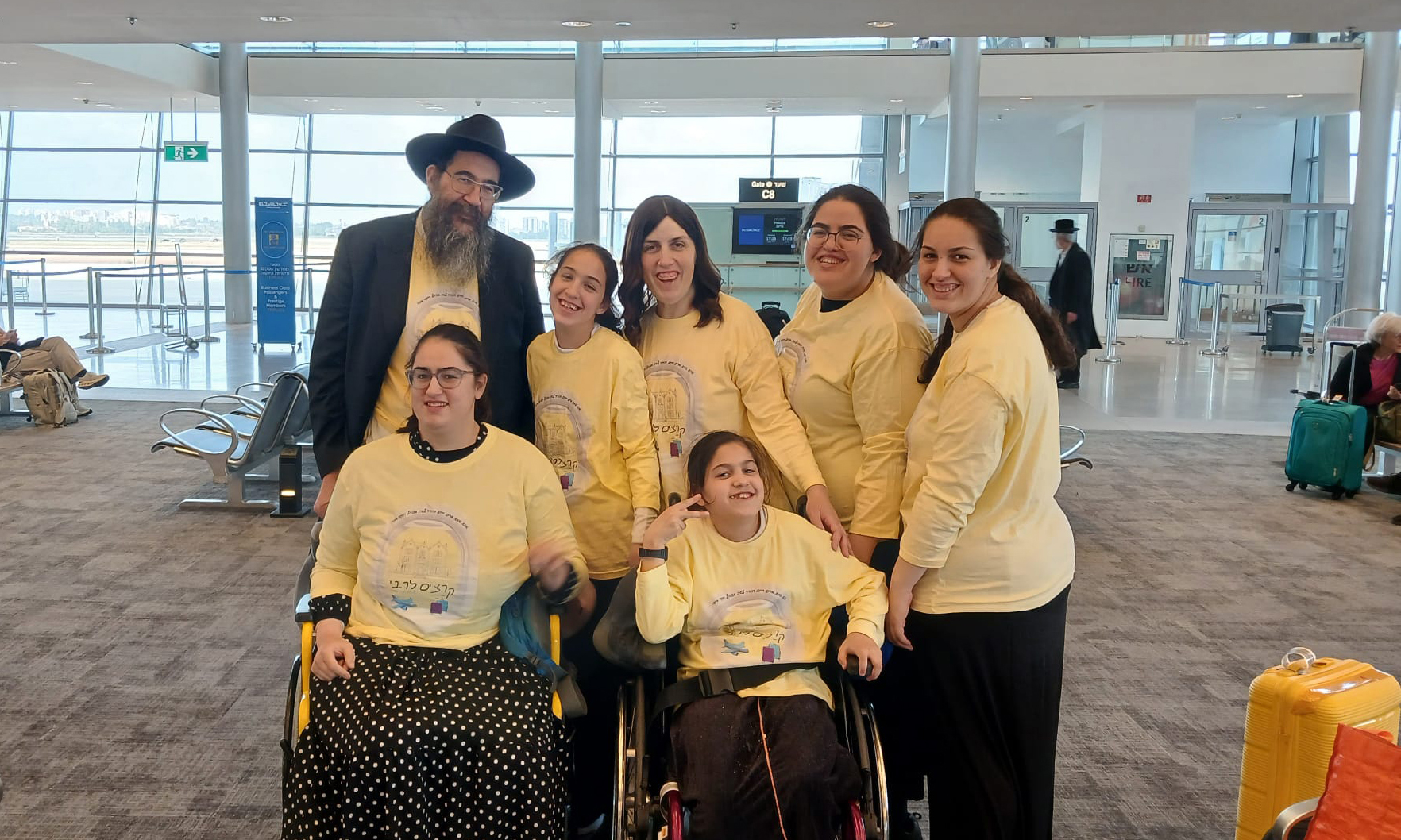
You use such positive words—"bonuses" and "diamonds." Yet in reality, you're facing enormously complex challenges.
"I didn't start speaking this way overnight. There's a time and place for everything. I had time to cry, time to absorb the news, and time to process it."
Shoshi candidly recalls the conversations she had with Hashem before the birth of her fifth child. "I had an agreement with Hashem that this time He would give me a healthy child. Rivka seemed like the perfect little girl, and everything appeared wonderful. The greatest crisis came when we discovered that our youngest, Chana, had the condition. Then, two months later, we learned that Rivka had also been given an especially extraordinary 'diamond.' That was an extremely difficult period."
Although she does not minimize the emotional devastation, Shoshi says her faith remained steadfast. "I told Hashem, 'All right, I understand that You've sent me special souls, and I'm going to need a tremendous amount of strength from You.'"
Around that time, she began working for the Chevra Kadisha, the Jewish burial society, preparing deceased women for burial. She saw the demanding work as part of her personal dialogue with Hashem. "I said, 'I'll do more than my strength allows, and You give me more strength than I have for my children.'"
People often ask whether she believes that arrangement actually worked. "Of course it did," she answers. "Who knows how catastrophic things might have been otherwise?" As for the unusual nature of her work, she recalls something someone once told her: "You don't need to be afraid of the dead. It's the living you have to worry about. The dead won't do anything to me."
She continued this sacred work for five years. However, when Miriam's condition suddenly deteriorated following the administration of a medication that was contraindicated for her, Shoshi left the Chevra Kadisha to devote more time to her daughter's care.
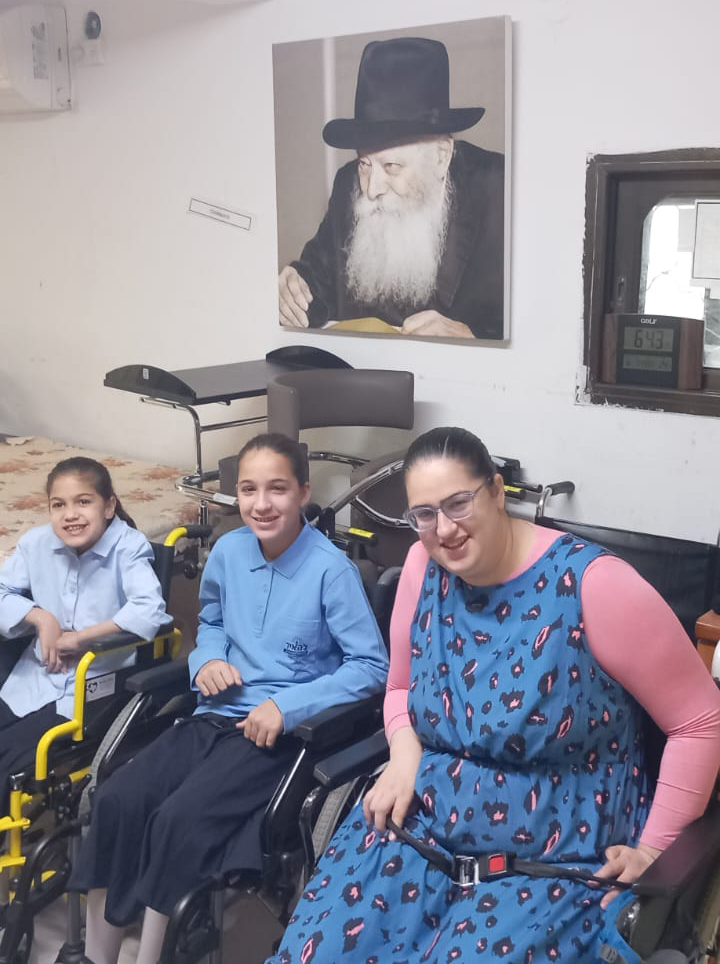 Miriam, Rivka, and Chana
"I Believe Mashiach Is Coming Any Moment"
Every morning, Shoshi wakes up ten minutes before her children. "I need just a little breathing room for myself," she explains. Once the girls are awake, her responsibilities begin immediately. Despite their ages, they require assistance with nearly every aspect of daily living, including dressing, bathing, eating, and putting on socks. "Their muscles are weak, and they're completely dependent on me. Sometimes I'll finish dressing one of them, and then something spills on her clothes, and I have to start all over again." While her daughters are at school, Shoshi spends much of her time navigating the seemingly endless bureaucracy associated with their care.
When I ask what she finds most difficult, her answer comes without hesitation. "When you change a baby's diaper or dress a toddler, you know it's temporary. Eventually, the child will grow up, become toilet trained, and learn to dress independently. But here, you know this is for life. I think that's the hardest part."
What gives you the strength to cope with this difficulty?
"I believe with complete faith that Mashiach is coming any moment," she replies with a smile. "So it won't be for life."
During particularly difficult moments, she turns to music. "Songs about faith, prayer, and joy. They give me so much strength."
Following Miriam's deterioration, doctors discovered that Rivka and Chana were also experiencing a decline in their physical abilities. "We were at Sheba Medical Center in Tel Hashomer when the doctor told me their condition had worsened. At that moment, I didn't have time to stop and absorb it. We were too busy taking care of them."
The emotional impact only hit the following day, after the girls had left for school. "I was listening to a program, and they played the song 'Mizmor L'Todah'—a psalm of thanksgiving. I thought to myself, 'What exactly am I supposed to be thankful for?' It was an incredibly difficult day. Suddenly, the realization hit me that all three of my daughters were deteriorating."
Eventually, however, she found herself looking at the situation differently. "I realized I could be thankful that, baruch Hashem, they can still see. That I can still understand them, and that they can tell me when something hurts or when they're struggling. I'm thankful that they have one another and that they help and support each other, especially the two younger girls."
Medical treatments are often painful and exhausting, but Shoshi has developed a way to make them a little more bearable. "When they were little, I got them used to the idea that after a painful or frustrating treatment, we'd go out for ice cream. As they got older, their expectations grew, and we upgraded to restaurants," she laughs.
Just the day before our conversation, one of her daughters underwent a challenging stomach imaging procedure. "She told me, 'Why should I care? Afterward, I get to spend a whole day out with you!'"
Does the condition also affect their cognitive abilities?
"No. Cognitively, they're doing wonderfully, baruch Hashem. They're intelligent, sharp, and have excellent memories. Hashem took something away in one area, but He gave them so much in others—in understanding, sensitivity, and awareness of the people around them. They love helping others."
A Plea for Greater Patience and Empathy
Alongside raising their children, Shoshi and her husband serve as Chabad emissaries in Afula's Givat Hamoreh neighborhood. Shoshi also works as a mikvah attendant, a role she considers another dimension of her mission. "I feel that I have several missions at once: my children, our neighborhood, and my work at the mikvah."
Raising children with special needs has also changed how she responds to the reactions of others. "There was a time when I felt embarrassed if one of my children behaved unusually in front of guests. Today, I tell myself, 'This is what Hashem gave me. It's not about me; it's this special soul. If someone has a problem with that, they can take it up with Hashem.'"
Shoshi is equally aware of the challenges faced by her two daughters who do not have special needs. "It's very, very hard for them. They're constantly expected to make sacrifices, and they have to do things their siblings can't. It's not easy at all."
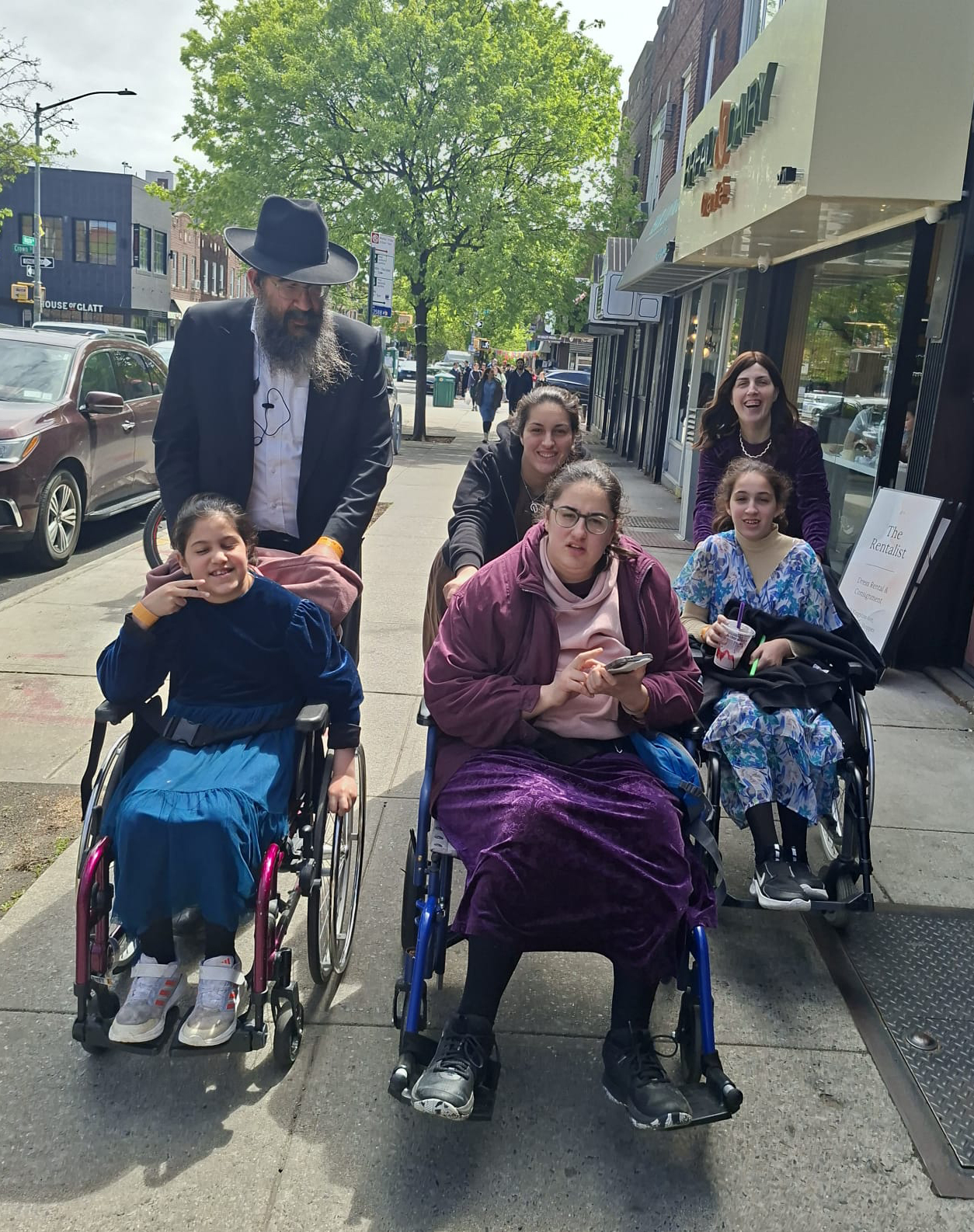
Last year, the family traveled to New York to visit the resting place of the Lubavitcher Rebbe. "It was a trip with three daughters in wheelchairs," Shoshi recalls. "Chaya Mushka and Devorah Leah came with us and helped tremendously. Afterward, it was important to me to let them stay an extra week so they could relax and enjoy themselves without having to care for their sisters."
The trip also exposed the family to some painful experiences that Shoshi believes deserve greater public attention. She explains that, according to the regulations, assistance should have been provided to help each disabled passenger disembark from the aircraft. "But there wasn't a single flight attendant to help us. We had to get all three girls off the plane ourselves."
The experience became even more upsetting at passport control. "When I asked for assistance, instead of receiving help, I was criticized. They asked why I had even taken the girls abroad in the first place."
Unfortunately, such reactions are not unfamiliar to the family. Shoshi recalls occasions when her children were reprimanded for their behavior in grocery stores or when people showed impatience because the family was entitled to priority service.
"If there's one message I want to give people, it's to have much more patience and empathy. Children with special needs have souls. Acknowledge them. Don't ignore them. If a girl in a wheelchair needs to pass, pay attention and make room."
One particularly painful experience occurs when her daughters return home from school in a specially equipped vehicle with a wheelchair lift. "That's one of the hardest things, especially in the Haredi community. Crowds of children gather to watch as though it's some kind of attraction. It's really unpleasant." For Shoshi, these moments highlight how much awareness and sensitivity are still needed.
"Health and Sanity"
Despite the difficulties, Shoshi has never tried to hide her family's circumstances. "I take my children to events, and we go out together. It's much easier when you're open about things. Hiding takes so much energy, and it's simply not worth it."
She sees speaking publicly about her experiences as part of her mission. "One of my responsibilities is to talk about what we're going through and encourage others. That's why I agree to interviews. I want to help other families and other people."
Drawing on years of experience, she offers two important pieces of advice to parents raising children with special needs. "First, invest in your marriage. The more you support each other as husband and wife, the easier it will be to cope with the challenges involving your children."
Her second recommendation is to make time for personal renewal. "It's extremely important for a mother to have a break. Go on vacation, go out to a restaurant, do something that gives you peace of mind. You need that opportunity to recharge."
As our conversation comes to an end, Shoshi wishes me "health and sanity"—a phrase she has adopted as her personal motto. "Yesterday, after finishing an X-ray appointment with one of my daughters, I thanked the technician and wished her 'health and sanity.' She looked at me and said, 'I remember you! You've been here before. Ever since then, I haven't stopped saying those words.'"
Shoshi smiles as she reflects on the importance of both. "We need them so much—physical health and mental well-being. That's what I wish for everyone. And, with Hashem's help, may Mashiach come and resolve everything."
 MagazineJournalist Menachem Horowitz Opens Up About Raising His Autistic Son
 Israel NewsWhat Mitzvah Can My Autistic Son Fulfill? A Rabbi’s Surprising Answer
 MagazineAfter 32 Years of Waiting: The Incredible Journey of Sigalit Asraf
 Personal StoriesDiagnosed With Cancer Days After Giving Birth: One Mother’s Story of Faith and Hope

