Interesting
Should You Refrigerate Apples? Expert Tips to Keep Them Fresh Longer
A Cornell University expert explains how proper storage can keep apples crisp and fresh for up to two months
- Hidabroot
- | Updated
To refrigerate or not to refrigerate? For apples, proper storage can make all the difference in preserving their delicious flavor and crisp texture. With grocery prices continuing to rise, knowing how to keep apples fresh can also help reduce unnecessary food waste.
For years, people have debated whether apples are best stored on the kitchen counter, where they're easily accessible, or in the refrigerator, where they may retain their freshness longer. According to experts, properly stored apples can last up to two months, making the choice of storage method particularly important.
Chris Watkins, a professor at Cornell University's School of Integrative Plant Science, leads a research program focused on postharvest fruit management, including how apples respond to different storage conditions. With four decades of experience in agriculture and plant science, Watkins has a clear answer: Apples should be refrigerated.
Watkins emphasizes that cold temperatures are essential for preserving apples because they slow the fruit's natural aging process. "Low temperature reduces their respiration rate and therefore slows the rate of aging," he says. As apples age, chemical changes gradually break down their tissues, eventually leading to deterioration and decay.
Why the Refrigerator Is the Best Place to Store Apples
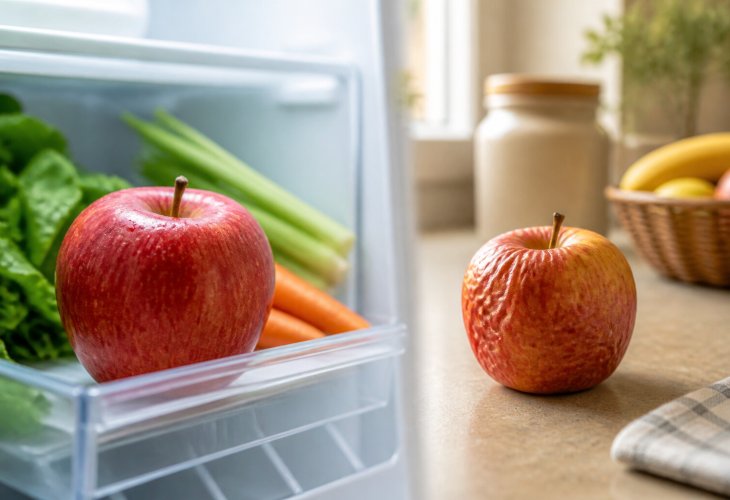
Apples stored in the refrigerator generally remain fresh significantly longer than those left on a countertop or kitchen table. According to Watkins, the ideal storage conditions are temperatures close to 0°C (32°F) and relative humidity of approximately 90%.
At 10°C (50°F), apples deteriorate two to three times faster than those stored at 0°C. This makes the refrigerator's fruit and vegetable drawer an excellent choice for home storage. Under suitable conditions, refrigerated apples can remain fresh for six to eight weeks, compared with just one to two weeks when stored at room temperature.
How to Store Apples Properly
To maximize freshness, handle apples gently and avoid damaging their protective outer layer. If washing them before storage, do so carefully and dry them thoroughly. Excessive scrubbing can remove the fruit's natural wax coating, which helps protect it from microorganisms.
For best results, place apples in a perforated plastic bag inside the refrigerator's produce drawer. The bag helps retain moisture and limits exposure to surrounding odors, while the perforations allow sufficient airflow to prevent excessive moisture buildup.
Whenever possible, arrange apples in a single layer with enough space for air circulation. Check them periodically and remove any that show signs of spoilage. Apples with bruises, cuts, or other damage should be eaten first, since they tend to deteriorate more quickly.
For longer-term storage, Watkins recommends keeping apples refrigerated and taking out only the amount you intend to eat over the next few days. "A good-quality apple will keep perfectly well in a fruit bowl for several days, depending on the variety," he explains.
Ultimately, refrigeration is the simplest way to extend the shelf life of apples while preserving their flavor and crunch. Keeping most of your apples chilled and leaving only a few on the counter for immediate use offers a practical balance between convenience and freshness.