

Parashat Toldot
What Yaakov and Esav Teach Us About Raising Children
Rabbi Samson Raphael Hirsch's interpretation of Parashat Toldot reveals why children with different personalities need different educational approaches—and how understanding each child's unique nature can help them thrive
- Amitai Chanaya
- | Updated

“The boys grew up, and Esav became a man who knew hunting, a man of the field, while Yaakov was a wholesome man, dwelling in tents.” (Genesis 25:27)
The Torah's description of Yaakov and Esav contains a subtle but significant detail. Their contrasting personalities are introduced only after the words “The boys grew up,” suggesting that the differences between the brothers did not become apparent immediately. Rashi explains that until the age of thirteen, Yaakov and Esav appeared to follow similar paths. Only as they approached maturity did their fundamentally different personalities and inclinations become evident.
Why does the Torah emphasize that their differences emerged only as they grew older? What lesson can we learn from this detail?
Two Children, Two Different Natures
Rabbi Samson Raphael Hirsch offers a profound educational insight. He suggests that Yitzchak and Rivka failed to recognize that their sons possessed different personalities, inclinations, and needs. Instead, they provided both children with the same education, emphasizing Torah study, contemplation, and the intellectual life of someone who dwells in the tents of learning. For Yaakov, this environment was ideally suited to his nature. For Esav, however, it was fundamentally at odds with his personality.
Rabbi Hirsch observes that Chazal never hesitated to identify shortcomings, whether minor or significant, in the conduct of our greatest ancestors. Rather than diminishing their stature, these observations deepen our understanding of the Torah and provide enduring lessons for future generations. In this case, he explains, the Sages hint that the profound differences between Avraham's grandsons were shaped not only by their natural dispositions, but also by an educational approach that failed to account for their individuality.
As long as the boys were young, their distinct inclinations remained largely unnoticed. They received the same instruction and were raised according to the same expectations, overlooking a fundamental principle of education: “Educate a child according to his way” (Proverbs 22:6).
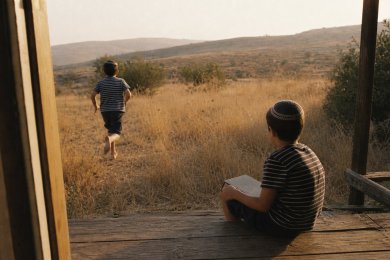
The consequences were profound. Yaakov flourished in an environment devoted to study, drawing ever more deeply from the wellsprings of Torah wisdom. Esav, by contrast, eagerly awaited the day when he could abandon his books and escape to the fields, where his natural abilities and interests could finally find expression.
The Importance of Individualized Education
Rabbi Hirsch emphasizes that the words “according to his way” are central to understanding effective education. Every child possesses a unique combination of talents, tendencies, strengths, and challenges. The responsibility of parents and educators is to recognize these qualities and guide each child along a path suited to his individual nature.
Education should not attempt to force every child into an identical mold. Instead, it should identify the child's particular abilities and use them as the foundation for cultivating character, wisdom, and commitment to Torah values.
Rabbi Hirsch writes that an educator must guide a child according to the path that will eventually suit the qualities and inclinations lying dormant within his soul. He then offers a striking warning: When Yaakov and Esav are placed on the same school bench, subjected to identical routines, and educated toward the same life of study and contemplation, one of them will inevitably suffer.
While Yaakov will embrace learning with increasing enthusiasm, Esav will merely count the days until he can cast aside his books and pursue the life that appeals to him. This, Rabbi Hirsch explains, is the significance of the Torah's words, “The boys grew up.” Only when they reached maturity did everyone discover that two children born to the same parents, raised in the same home, and given the same education could develop into individuals whose personalities and actions were so dramatically different.
Recognizing a Child's Potential Before It Is Too Late
The fact that these differences became apparent only as the brothers grew older suggests that their distinct inclinations had been present all along. They were simply not recognized or adequately addressed during childhood.
Rabbi Hirsch's interpretation raises a thought-provoking possibility: Had Yitzchak and Rivka identified their sons' differences earlier and adapted their educational approach accordingly, perhaps Esav would not have strayed so dramatically from the path of his ancestors. Perhaps his natural attraction to physical activity, the outdoors, and a more active way of life could have been channeled toward meaningful pursuits consistent with the values of his family.
The lesson is not that every child's preferences should determine the values they are taught, but the same values may need to be communicated and cultivated through different approaches, depending on the child's personality.
A child who thrives through intellectual study may respond beautifully to sustained learning and reflection. Another may need practical experiences, physical activity, or opportunities to develop responsibility through action. Neither approach is inherently superior; what matters is finding the path that allows each child to grow.
The Torah's description of Yaakov and Esav thus offers a timeless lesson for parents and educators. Children raised in the same family, exposed to the same teachings, and given the same opportunities may still require very different forms of guidance.
True education begins with understanding the child standing before us. By recognizing each child's individuality and nurturing their unique strengths, parents and educators can help them develop their potential while remaining firmly connected to the values they seek to instill.
There is no single educational approach that works equally well for every child. The goal is not to make every child follow the same path, but to help each one discover the path through which they can flourish.
 Parashat ToldotTwo Nations, One Struggle
 Parashat ToldotWhy Did Yaakov Receive Esav’s Blessing? The Abarbanel’s Explanation
 Parashat ToldotDoes Hashem Love Us for Who We Are? A Powerful Lesson from the Haftarah of Toldot
 Parashat ToldotWhen Life Feels Unfair: The Hidden Message Behind Jacob, Esau, and the Blessings

