

Behind the News
Beyond the Ballot Box: What Elections Teach Our Children About Unity
As political divisions deepen in Israel, a simple argument between two schoolboys raises a powerful question: Can we teach our children to disagree respectfully, preserve friendships, and remain united despite our differences?
- Avinoam Hersh
- | Updated
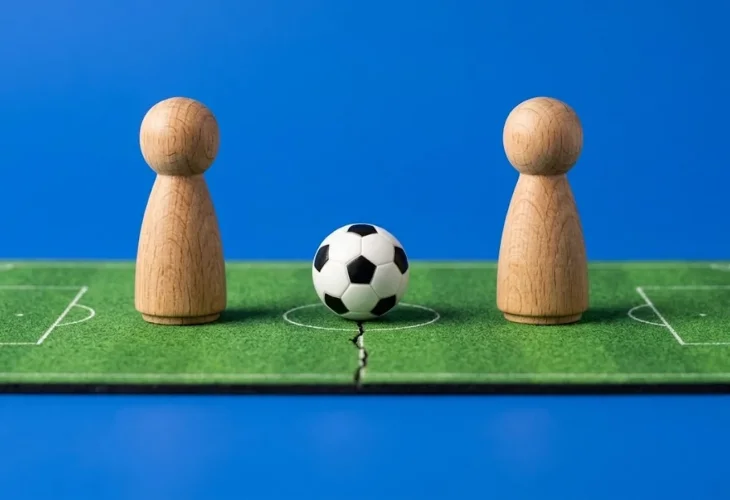
This week, I heard about two fifth-grade students who got into an argument during recess about the elections. One insisted that Netanyahu would save the country. Only Netanyahu, he declared, because who could possibly replace him? The other was equally convinced that if Netanyahu won, Israel would have no future.
Their teacher, who had been listening to the exchange, asked a simple question: "Tell me something. Tomorrow morning, after all the votes have been counted, will you still play soccer together?"
Both boys fell silent.
Perhaps that simple question captures something far more important than the argument itself.
We spend endless hours debating who will win the elections, who will form the next government, who will sit in the opposition, and who will celebrate while everyone else writes angry social media posts. These questions matter, of course. Political leadership has real consequences for national security, the economy, education, and our everyday lives. Yet there is one thing no government can decide for us: What kind of people will we be the day after the election?
Leadership Cannot Replace Personal Responsibility
Rabbi Lord Jonathan Sacks, of blessed memory, warned against the belief that a powerful leader could solve all of society's problems. In his reflections on facing the future without fear, he emphasized the importance of personal responsibility and the role each individual plays in shaping society. When the campaign strategists have packed up and the political advertisements have disappeared, we will still be here, facing one another and sharing responsibility for the country we call home.
Perhaps the question shouldn't be only who gets to occupy the seats of power, but also who is willing to give up a seat on the bus for someone who needs it.
Rabbi Sacks also offered an idea that feels almost revolutionary in today's political climate: We can disagree passionately and still remain friends. We don't need to share the same opinions to extend a hand to one another. We simply need to remember that behind every opinion we find infuriating stands a human being, not merely a representative of a political party.
This isn't just a pleasant sentiment suitable for an inspirational social media post. A study published in 2026 in the journal Electoral Studies examined survey data surrounding six national elections and eleven regional elections in Canada. Researchers found that supporters of losing parties tended to report lower levels of social trust after elections, particularly when they felt hostility toward voters from the opposing political camp.
Consider what that means. We're not talking only about trust in politicians or political institutions. We're talking about trust in other people: our neighbors, the parents standing beside us at a school graduation, and the people who may vote differently but share the same responsibilities and concerns.
That is where our role as parents and educators begins.
What Are We Teaching Our Children About Democracy?
Imagine a classroom on the morning after an election. Half the students are celebrating, while the other half are disappointed. The teacher could spend the lesson analyzing parliamentary seats, coalition agreements, and political appointments. But there's another question worth asking: How can we make sure that the child whose preferred party lost still feels that he belongs in this classroom?
Democracy doesn't end when we place a ballot in the box. In many ways, its greatest test begins when the votes are counted, the results are announced, and we must decide whether the person who disagrees with us is a partner in society or an enemy.
In his book The Politics of Hope, Rabbi Sacks emphasized that a healthy society depends not only on government, but also on families, communities, and mutual responsibility. A ballot box can count votes. It cannot create compassion.
And there's something else that troubles me. Our children don't need us to tell them what to think about Netanyahu or his political opponents. They need us to demonstrate how to disagree without humiliating others, how to lose without falling apart, and how to win without trampling on those who supported the other side.
They need adults who can say, "I'm convinced I'm right, but perhaps there's something I haven't understood." That isn't weakness. It's an essential democratic skill, one we've neglected to practice.
If we expect a ten-year-old student to apologize after hurting a classmate, perhaps it's time we demanded the same of ourselves. After all, children don't necessarily read political platforms. They read us—even when we think they aren't paying attention.
Do We Really Want Unity?
Perhaps it's time to confront an uncomfortable possibility: What if, deep down, we don't actually want unity?
We say we do. We share photographs of children embracing and quote verses about Ahavat Yisrael, the importance of loving our fellow Jews. But there can be something strangely addictive about hostility: the certainty that we're right and everyone else is the problem, and the comforting belief that as long as the blame belongs to the other side, there's no reason to examine our own behavior.
Perhaps that is one of our greatest educational failures. In the morning, we teach children that excluding a classmate is unacceptable. By evening, they watch us exclude half the country. We ask them to listen respectfully to people who think differently, then demonstrate that we're willing to cut people out of our lives because of the ballot they cast. We tell them that friendship should transcend disagreements, yet allow political differences to destroy relationships that have lasted for years. What lesson are they really learning?
Children absorb far more from our behavior than from our lectures. And if the values we teach them disappear the moment politics enters the conversation, we shouldn't be surprised when they struggle to practice those values themselves.
The Society We Create Is Our Responsibility
Before asking what kind of government we deserve, perhaps we should ask what kind of society we're creating. Are we building communities where people can disagree without becoming enemies? Are we teaching our children that political disappointment doesn't diminish their worth or threaten their friendships? Are we willing to extend the same courtesy and understanding to people who vote differently as we expect them to extend to us?
These questions won't be answered by election results. They'll be answered in our homes, schools, workplaces, and everyday encounters.
And perhaps we should return to those two fifth-grade boys arguing during recess. Tomorrow morning, one of them may be celebrating while the other feels defeated. They may continue believing that the future of the country depends entirely on whether their preferred leader won or lost.
But when the bell rings and recess begins, they'll face a choice that no politician can make for them. Will they still play soccer together?
Because while a government can sometimes be replaced in a single day, changing the people we've become is a far more difficult task.
Avinoam Hersh is an educator and founder of the parenting community Mitbagrim B'Ahava (Growing Up With Love).
 Faith (Emunah)The Spiritual Iron Dome: Prayers for Jewish Unity and Protection
 Behind the NewsExplained: Netanyahu’s New Push for a “Broad National Government”
 Behind the NewsCould Gantz, Hendel And Simchi’s Merger Decide Israel’s Next Government?
 Behind the NewsZvi Yehezkeli: It's the Same Jihad, Just by Other Means

