

Magazine
“After Ten Years, We Finally Came Home with Our Miracle”
After ten years of fertility struggles and six miscarriages, Tamar and Gidi finally welcomed a premature son. On their tenth anniversary, they brought him home. Tamar shares their journey from heartbreak to hope.
- Shira Dabush
- | Updated
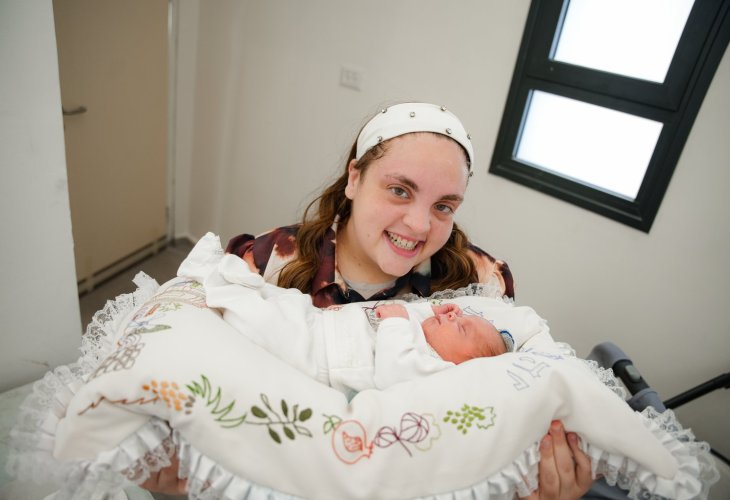 Tamar with her son, home at last
On their tenth wedding anniversary, Tamar and Gidi had not planned a special celebration. There was no romantic dinner, no elaborate decorations, and no speeches. Instead, the day was hectic and filled with last-minute preparations. Yet it became the happiest day of their lives. After ten years of marriage, 11 egg retrievals, 16 embryo transfers, and six miscarriages, they were finally bringing their baby boy home.
They had imagined this moment countless times: walking through their front door with a baby in their arms, hearing his tiny cries, and finally becoming the family they had prayed so desperately to be. But even when their dream came true, another challenge awaited them. Their son was born prematurely and needed care in the neonatal intensive care unit (NICU). After a decade of waiting, they were forced to wait again.
“It was incredibly difficult,” recalls Tamar Shelley (33), an entrepreneur and digital marketing professional from Ramat Beit Shemesh. “We had waited so many years to celebrate this incredible gift, and not knowing when we would finally be able to celebrate it in our own home was extremely painful.”
Then, on their tenth wedding anniversary, their miracle finally came home. “How many people can say that after fighting for ten years to have a child, they got to bring their miracle baby home on their tenth wedding anniversary? How special is that!”
But to understand the depth of Tamar’s happiness, we must return to her childhood, when she first learned what it meant to lose someone she loved. Tamar was only eight years old when her father passed away. Years later, when she experienced repeated miscarriages, memories of that early loss resurfaced.
“After my second miscarriage, the pain was overwhelming. I remember telling myself, ‘Tamar, you’ve been through this before, remember? So you’ll get through this too.’ There wasn’t much else I could do.”
Losing her father had taught her something about surviving heartbreak. “I was only eight when my father died. Hardship had almost become a natural part of my life, but losing him at such a young age made me stronger. I became a much more resilient person.”
“Something Inside Me Began to Change Spiritually”
That resilience would be tested repeatedly throughout her marriage. Every fertility treatment brought renewed hope, and every negative result another crushing disappointment. Sometimes a pregnancy began, only to end in miscarriage. Meanwhile, friends were having babies, families were growing, and Tamar and Gidi continued waiting.
Even well-meaning comments could deepen their pain. “Sometimes, people with the very best intentions would say things that were incredibly hurtful. Unsolicited advice, personal questions, and promises that everything would work out can place an additional burden on someone struggling with infertility.”
Rather than remain silent, Tamar sometimes explained why certain remarks were painful and how genuine support could be offered without trying to solve another person’s suffering.
What was the most painful part of this experience, and how did you cope with it?
“At the beginning, I prayed and hoped. But as the years passed and the positive pregnancy test we were waiting for never came, something inside me began to change spiritually. I remember writing a post about it approximately four years after we started fertility treatments. I felt so distant from God and Judaism, but I never stopped wanting to be close to Him. Quite the opposite. That distance troubled me deeply, and I kept searching for a way back.”
Surprisingly, she found that path through studying Gemara with her husband. Having studied Gemara at her Jewish high school, Tamar suggested they begin learning together. They chose the ninth chapter of Tractate Berakhot, studying Rashi and Tosafot at their own pace. In lives dominated by appointments, procedures, and medical results, their learning became a precious opportunity to reconnect spiritually.
After so many years of unanswered prayers, what truly sustained your faith?
“What really kept me going was seeing how many people were praying for us, caring about us, taking on additional mitzvot, and strengthening their connection with God and Judaism because of our story.”
When Tamar struggled to find hope, others continued praying. Slowly, she began seeing a deeper meaning in her experience.
“I felt that God needed a messenger to help people along this path. Although I would never, not even in a million years, wish this experience upon myself, I believe with all my heart that I was chosen for this mission for a reason. I feel blessed to have been able to see even a small part of that reason.”
Tamar does not pretend the suffering was worthwhile or that she would ever willingly choose it again. But within a reality she had never wanted, she discovered an unexpected opportunity to help others.
“I Created Initiatives That Brought People Together to Pray for One Another”
At a certain point, Tamar decided to stop hiding her struggle. She opened an Instagram account called Tales of Tamar, where she began sharing her experiences with infertility, miscarriages, disappointment, and faith.
It was a courageous decision. Infertility is deeply personal, especially in religious communities where women may fear intrusive questions, judgment, or pity. Yet her openness created something remarkable. Women and couples began contacting her, sharing their experiences and asking how they could support others facing similar challenges.
Tamar realized her story could become more than a personal account of longing for motherhood. “I started organizing projects where people prayed for one another, as well as challah-baking and challah-separation initiatives dedicated to couples who were still waiting to have children.”
Where did you find the strength to transform your own suffering into helping others?
“It is my privilege. I feel tremendous gratitude that through my prayer initiatives and challah-baking projects, I was able to help others on their journeys toward having children. There were also people who told me that my page had inspired them to decide to have children themselves. What an incredible privilege!”
Gradually, an entire community formed around her journey. “People who had never met one another began praying together, strengthening one another, and feeling that they were part of something much bigger. That community continued supporting us even when the news we had been waiting for finally arrived. It was incredibly moving.”
And then, after years of disappointment, Tamar discovered she was pregnant again.
For a woman who had already suffered six miscarriages, the news brought both overwhelming joy and profound fear. She desperately wanted to celebrate, but experience had taught her how fragile hope could feel. Nevertheless, she decided to share the news with the community that had accompanied her journey.
“Suddenly, dozens of encouraging messages started pouring in. People who had been praying for us to have children were so incredibly happy to hear the news.”
The pregnancy continued, and Tamar and Gidi finally began imagining life with their baby. But their son arrived earlier than expected, at 34 weeks and two days, and required hospitalization in the NICU.
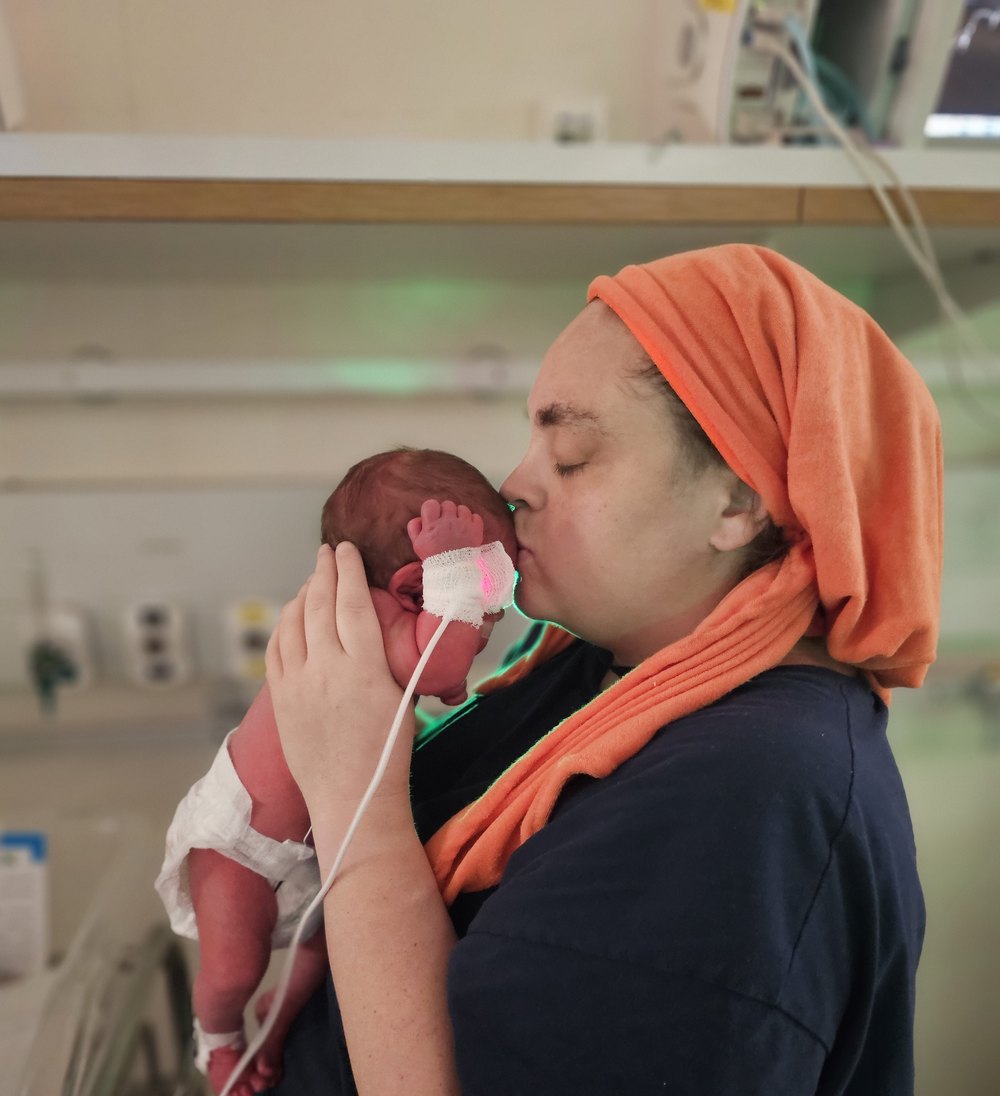 Tamar with her newborn son in the NICU
After ten years of infertility, even the birth of their long-awaited child did not immediately bring an end to the uncertainty.
“We kept thinking, ‘Really? Isn’t this over yet?’ We wanted so badly to begin our new lives as parents, and then we realized we were once again on hold. Once again, we had to wait. It was incredibly hard for us to process.”
“I Refused to Let the Pain Take Over Every Part of Who I Am”
As the High Holidays approached, Tamar worried that their baby would remain hospitalized while everyone else gathered with their families. “We were entering the holiday season, and I was afraid we would be forgotten.”
But finally, on their tenth wedding anniversary, Tamar and Gidi received the gift they had spent a decade praying for. They were able to bring their son home.
“Baruch Hashem, we celebrated so much, and every single day of his life is a celebration! He truly is such an incredible blessing, and we are grateful beyond anything words could ever express.”
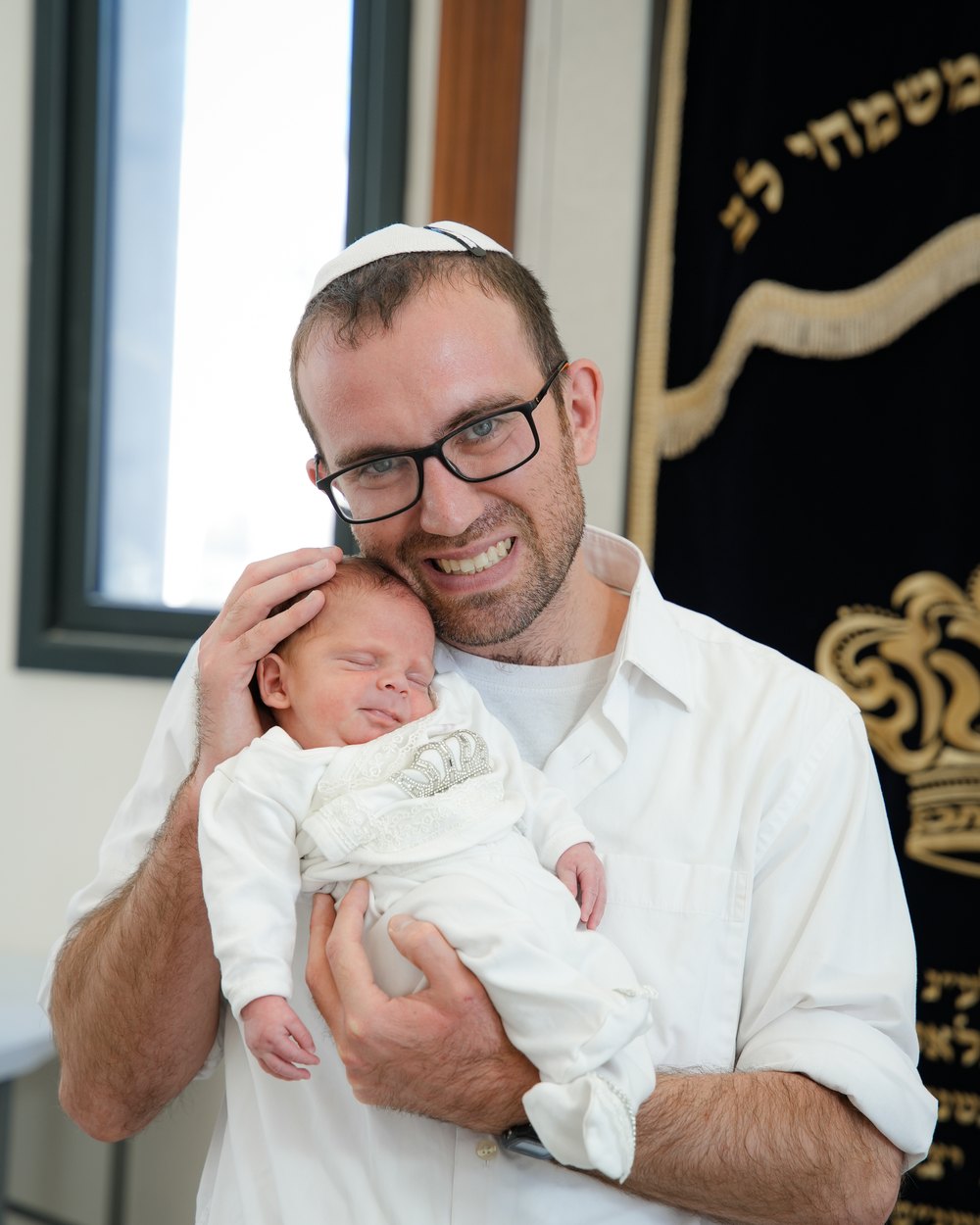 Gidi with their long-awaited son
Today, as Tamar adjusts to motherhood, she has not forgotten the decade that preceded her son’s birth. She remembers the medical procedures, the miscarriages, the negative results, and the nights when she wondered whether she would ever hold a child of her own.
She also remembers the strangers who prayed for her, the challahs baked in her merit, and the extraordinary community that carried her through some of her darkest moments.
Most importantly, she remembers the women who are still waiting. Women returning to fertility clinics month after month, struggling to celebrate their friends’ pregnancies, or wondering whether they have the strength to face another disappointment.
For years, Tamar was one of those women. Yet throughout her journey, she made a conscious decision not to allow infertility to define her entire existence.
“I always tell my husband and everyone else, ‘God can say no to me, but He can’t say no to all the people praying for us. Eventually, He’ll have to say yes.’”
Looking at her son today, those words carry an extraordinary emotional weight. For ten years, Tamar had no idea whether her prayers would be answered. She only knew that she wanted to keep living, believing, and finding purpose, even when her heart was breaking.
Not every story of infertility ends with a baby, and no one can know why some prayers seem to be answered while others remain unanswered. Tamar understands that reality intimately. But she hopes her journey can offer strength to women still struggling with uncertainty.
“If it happened to me, it can happen to any one of you. Not every prayer is answered exactly when we ask, but if other people are praying for us too, eventually it will happen.”
 MagazineFaith After Infertility: Efrat Nili on Acceptance and Growth
 MagazineA Journey of Faith, Love, and Strength: The Life Story of Rabbi Yossi Cohen and His Wife Raaya
 MagazineThe Advice from Rav Chaim Kanievsky That Changed Everything
 MagazineBen Ben Baruch: Faith, Comedy, and the Power of Clean Humor

