Raising Children
Using Screens to Calm Children May Undermine Emotional Regulation, Study Finds
New research suggests that using smartphones to soothe tantrums may create a cycle of screen dependence and poor self-control, highlighting the importance of alternative calming strategies and parental emotional well-being
- Yitzchak Eitan
- | Updated
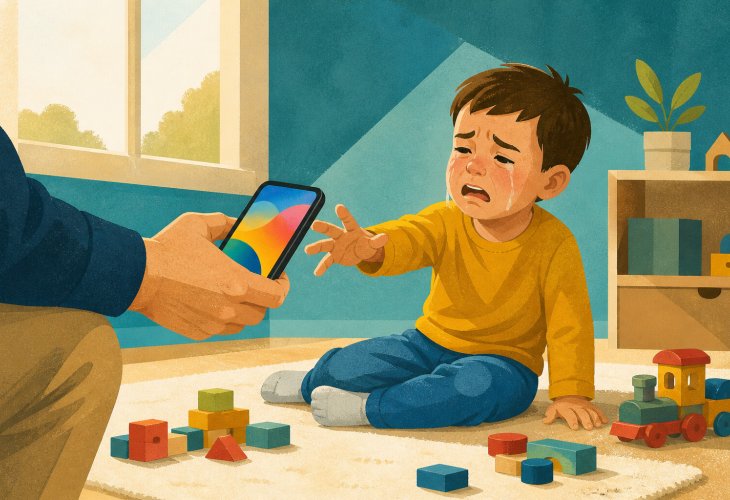
It is a situation familiar to many parents: a child starts crying in the checkout line, becomes disruptive at a restaurant or refuses to settle down in the evening, and a smartphone is immediately offered to calm them. For the first few minutes, it works. The child settles down, and the immediate crisis passes. But a new US study examines what happens when this becomes a habitual response.
The study was led by Jane Shawcroft of Ohio State University, in collaboration with researchers from Brigham Young University and Georgetown University. It was published in the Journal of Communication and reported by PsyPost.
The Connection Between Screen Time and Self-Regulation
Researchers followed 87 children over several years, from approximately two and a half to seven and a half years of age. Each year, parents reported how frequently they used screens to help their children cope with difficult situations. The researchers also assessed the children's ability to control impulses and demonstrate cognitive flexibility.
The main finding was that more than 87% of the children exhibited a pattern of reciprocal influence. The use of screens as a calming tool and children's self-regulation abilities appeared to influence one another over time. In practical terms, children may increasingly come to rely on screens as their first response to anger or frustration, while parents of children who struggle to calm themselves may become increasingly reliant on digital devices to soothe them. This can create a self-reinforcing cycle.
The Role of Parents’ Mental Health
Another interesting finding concerned the parents themselves. Household income, children's levels of anger and parental stress were generally poor predictors of which group a child would fall into. However, when parents experienced symptoms of depression, their children were more likely to belong to the group in which the use of screens for calming preceded difficulties with self-regulation.
The findings suggest that addressing children's reliance on screens may also require greater attention to parents' emotional well-being and the challenges they face.
Helping Children Develop Emotional Regulation Skills
According to the researchers, the solution should extend beyond simply reducing screen time. Alongside limiting the use of digital devices as a calming tool, parents need alternative strategies for managing tantrums and supporting their children's emotional development.
These strategies may include offering a comforting hug, practicing calm breathing together, helping children put their feelings into words or taking them to a quiet space where they can gradually settle down.
Equally important is attending to parents' own mental health. Parents who feel emotionally exhausted, overwhelmed or persistently low may benefit from professional support, such as parenting guidance or counseling. Helping parents develop healthier coping strategies may ultimately help their children develop those skills as well.