

Magazine
From Silence to the Stage: How Esther Gad Found Her Voice
For years, Esther Gad expressed herself only through writing. Now, the singer songwriter is bringing her songs, faith, and personal journey to the stage.
- Michal Arieli
- | Updated
 Esther Gad (Photo: Ora Nachum)
When Israeli singer-songwriter Esther Gad stands onstage and shares the songs she writes and composes, even she sometimes finds it hard to believe how far she has come.
“For years, I was an insecure girl who was afraid to express herself, and mostly didn’t know how,” she says.
“Writing and music were always part of my life, so I would simply write. I would put down how I felt and what I wanted. I loved working with words, and whenever I wanted to understand what I was going through, I would open my notebook and read what I had written. That was how I communicated with myself, and I thought it would always be that way. But life showed me there was another way.”
She pauses for a moment before adding: “That’s why today, when I perform in front of an audience, I feel there is such a strong sense of purpose in it. I want to show anyone who has been on a similar journey that it is possible to break the silence and express ourselves. Because we, too, the quiet ones, have something to say.”
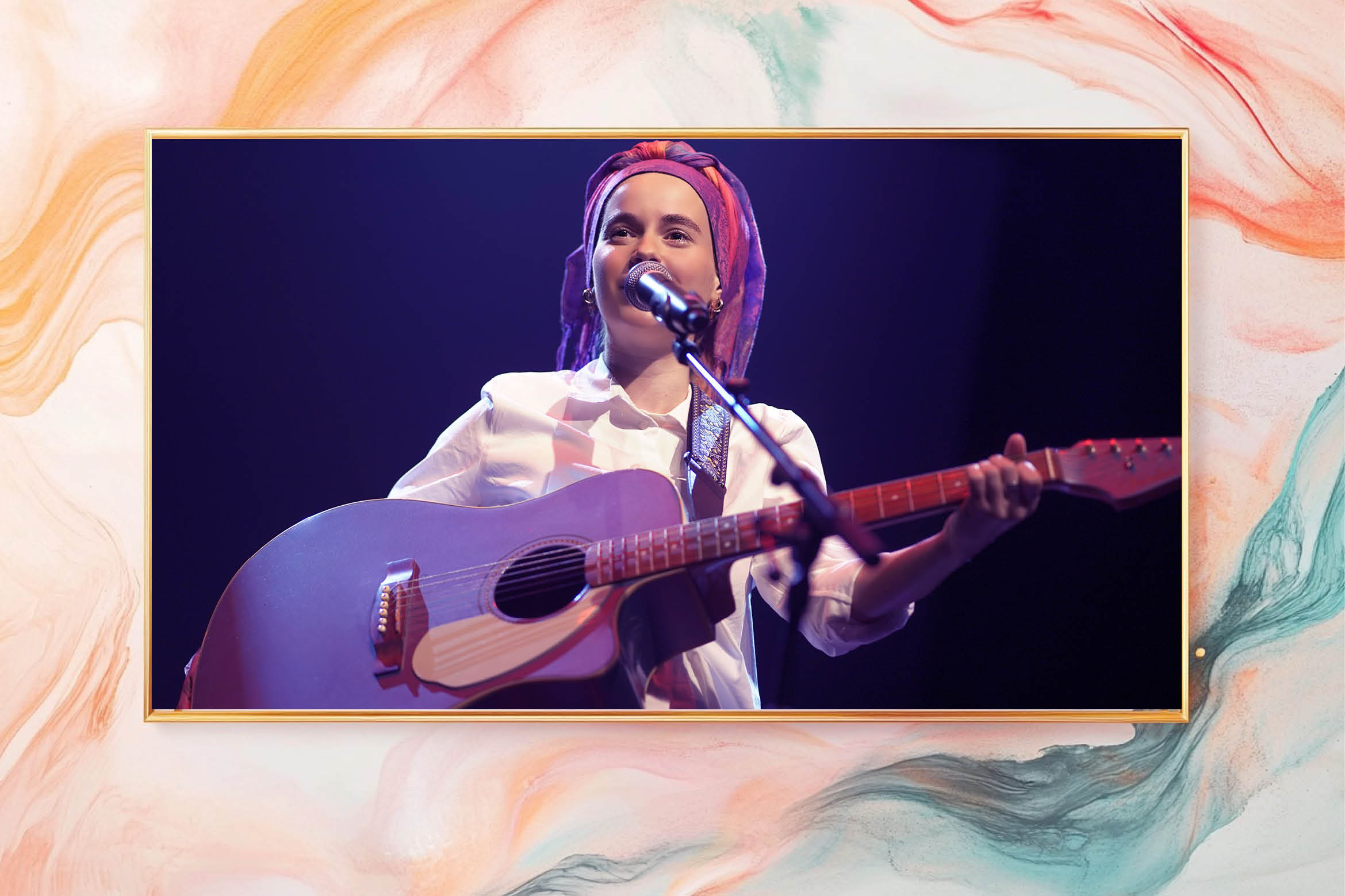 Photo: Reut Ben Moshe
Breaking the Silence
Esther grew up in Beit Shemesh in a typical family. “I attended regular schools,” she recalls, “and I was always a people pleaser. I wanted to get along with everyone and do whatever was expected of me.
“From a young age, I felt connected to the world of music. I didn’t know or imagine that I would one day work in it professionally. It was simply part of who I was. I was composing songs from a very young age, first for my dolls and later recording myself singing melodies I had created for words from the siddur.
“Later, I learned to write texts in elevated language that expressed my thoughts and feelings. I felt an incredible sense of confidence when I was with my words, knowing that I could always return to them, refine them, change them, shorten them, or expand them. But they belonged to me alone. I never dared to talk about them or show them to anyone else. That continued not only when I was a child, but throughout my teenage years and even into young adulthood.
“I had so much to say, but I was afraid to look my friends in the eye, mainly because I simply didn’t know how. There was some kind of emotional barrier holding me back, and I thought that was just who I was and that there was no way to change it.”
Meanwhile, Esther continued writing, filling diaries, pages, and notebooks with songs. They remained on paper and in her recordings, almost as though they were waiting for the right moment to finally emerge.
Some people are naturally quiet and comfortable staying that way. Was that how you felt?
“No, that wasn’t me,” Esther emphasizes. “I always felt that I wanted to speak and make myself heard. I just didn’t know how to do it.
“It was complicated because I didn’t even know how to define who I was. I wasn’t a silent person who never spoke. On the contrary, I was pleasant, easygoing, and social. But whenever a conversation reached the point where people expressed their opinions or shared what they were really thinking, I didn’t know how to do the same.
“The change finally came thanks to a close friend who was like a sister to me. She truly believed in me, took an interest in me, and tried to help me. She was the first person I ever dared to ask, ‘Why are you interested in who I am? Why do you care about my life and my story?’
“Because of her, I learned to talk about myself and express my feelings in words, not only through music. I discovered an entirely new world. It became so important to me that I deliberately put myself in situations where I would have no choice but to speak.
“For example, I happily accepted an offer to become a youth counselor, even though I lacked confidence. At the dormitory school where I studied in Ofakim, there was also a custom that at every Shabbat meal, a different girl would share a dvar Torah based on the weekly Torah portion. I had never dared to be one of the speakers, but one Shabbat I decided I was going to do it. I rehearsed the idea dozens of times. I changed colors from nerves, and although I was shaking with fear, I did it.”
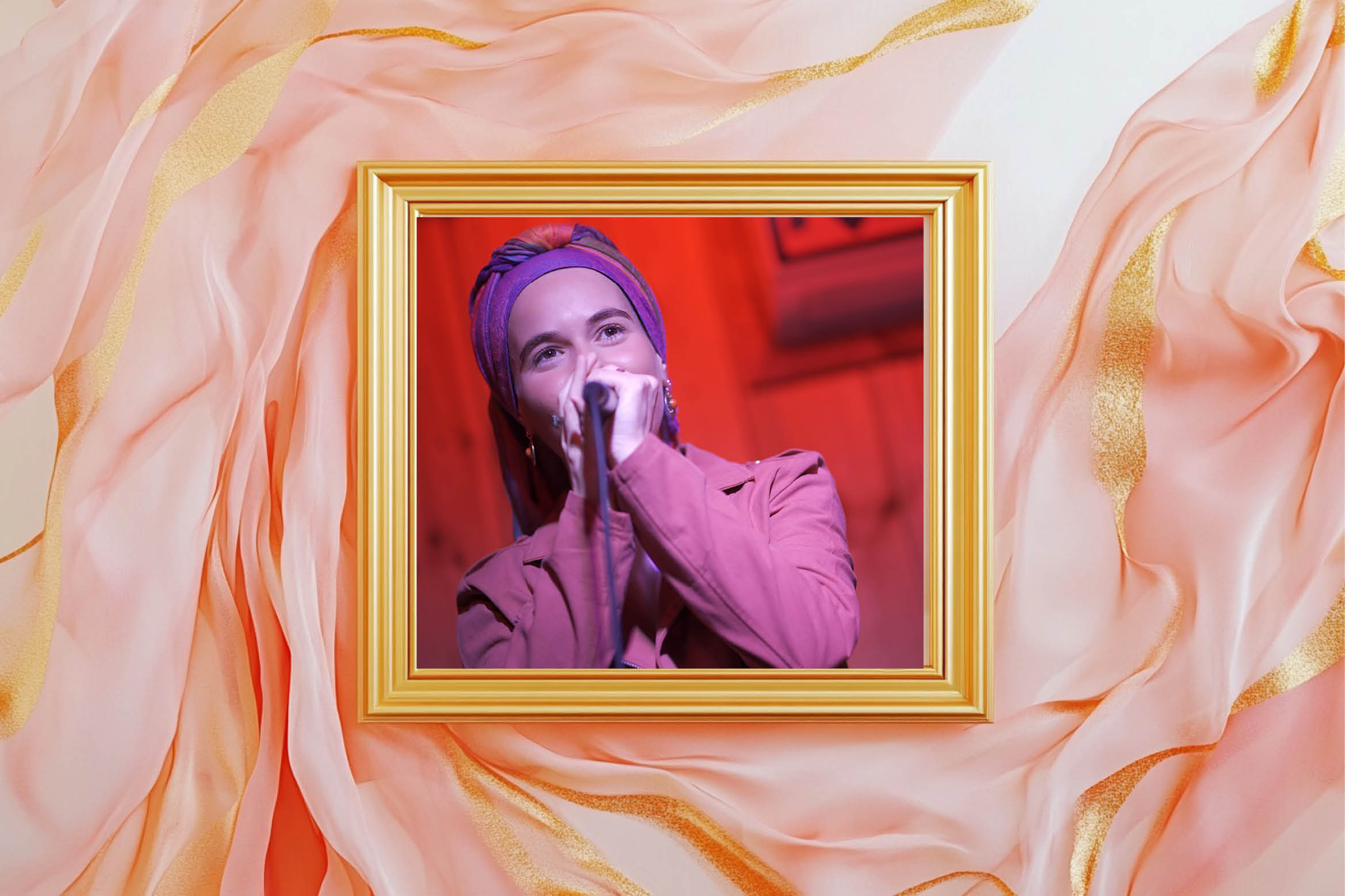 Photo: Sharon Gabai
Finding Her Voice Through Music
As Esther gradually learned to express herself, her music began to develop alongside her newfound confidence.
“It was a time when I started daring to let my friends hear songs I had written and composed, and to believe that they were actually interested in them. Suddenly, I noticed that I could speak to them face to face and explain myself, something I had never dared to do before.”
Today, Esther says, it almost feels strange to talk about that period because she is in such a different place.
“But if you had asked me back then, I never would have imagined there was any chance this could happen.
“I was born again at 20,” she says emotionally. “It happened slowly, step by step. After years of developing certain beliefs about myself and convincing myself that I wasn’t capable, it felt like a miracle.”
And what about the songs? Had you already realized that music could become your profession?
“No, not at all. Back then, I thought everyone made up songs the way I did. It never occurred to me that I was doing anything unusual. When friends were impressed, I would tell them, ‘Try it too. It’s so easy.’
“But as time passed and I received more and more positive reactions to my songs, I began to understand that I had received a tool from the Creator, that this was a gift from Heaven and something I couldn’t take for granted.
“When I turned 20, that same close friend gave me a special gift: a notebook for my songs. To this day, I remember how much I laughed at her. ‘A notebook? Do you really think my songs are worth these pages?’ But very quickly, there was no room left in it. I bought more notebooks, which joined countless pages and recordings, because by then I was writing and recording day and night. My singing slowly began turning into something much bigger, without me ever intending it to.”
Esther’s music gained real momentum during the COVID period, when her seminary studies were interrupted and she returned home.
“At a time when everyone seemed unsure what to do with themselves, I was writing and composing,” she recalls. “I had one fixed rule: two or three songs every day. I felt as though a dam had burst open inside me, and all I had to do was let it flow. I was constantly recording and filming myself, and afterward I would play the songs for friends and family.
“Even then, I didn’t think it would become a profession. When people asked me why I was writing so much, I would answer very seriously, ‘I want to be a sweet mother to my children and sing them songs that I wrote and composed.’”
From the Notebook to the Stage
Things began moving forward after Esther got married and her husband heard her songs for the first time.
“He made it very clear to me that I had to do something with them. I was still hesitant, but this time it wasn’t because I lacked confidence. I was concerned about doing something that might conflict with halacha or lead me into an area of halachic uncertainty. I didn’t want to operate in a gray area. I wanted everything I did to be fully permitted from the outset.
“I spent a great deal of time thinking, clarifying, and consulting. Only after I understood exactly how I should proceed did I attach the title ‘singer songwriter’ to my name for the first time. The truth is, it still feels foreign to me. I remind myself again and again that nothing comes from me. Everything comes from the Creator.”
What does your work in music look like today?
“I’m often invited to perform, sometimes solo and sometimes as part of an ensemble. For a period of time, I was also a teacher and an 11th grade homeroom educator. My students had a slightly unusual teacher, one who played guitar before prayer to help create the right atmosphere.
“Every morning, I taught them a new song. It made me so happy when students would come up to me afterward and tell me that a song had touched their hearts or spoken to them. Some mothers even told me that their daughters looked forward to it every morning.
“The more I worked in music and explored its different layers, the more I realized that I wanted to do it wholeheartedly, not halfway. At first, I thought I would simply write and compose songs and let other singers perform them. But eventually, I realized that I wanted to sing my own songs.
“They are my way of expressing who I am: my messages, thoughts, insights, and above all, my journey. Only someone who has lived that journey can convey it exactly as it was experienced. These days, I’m launching my first original show featuring my own songs, accompanied by a professional band, with tremendous investment in every detail.”
One of the songs featured in the show, released recently, is called “Suspended.”
“It speaks about the feeling of moving through this world somewhere between earth and Heaven. We feel as though we can see, but ultimately our eyes are closed and there is so much darkness around us. Yet even within that uncertainty, Hashem chooses to shine a light for us, giving us hope and the possibility of finding our way.
“I sing, ‘I will know that I do not know, something not in my hands... until You choose to open my eyes...’ Those words accompanied me through many important crossroads in my life.
“The song was written about six years ago, during a period of hesitation and uncertainty when I had begun searching to build my home and was filled with questions. I would sing the words of this song, which, together with my other songs, gradually became the soundtrack of my life.”
After much thought, Esther chose to call her show “Return.”
“That word, more than anything else, expresses what I have been through. I feel that by choosing to be who I truly am in this world, I am bringing my journey back to its earliest and purest point. I am choosing it, and in doing so, choosing myself.
“In my performances and in the new show, which will take place this coming Tuesday, at the Pisgot HaSheva Hall in Beit Shemesh, it is important for me to bring my full self without hiding or being afraid to be who I am. I do that through the songs and words in which I found myself, the ones that helped me return and reconnect with my identity.”
Do you really believe anyone can go through a transformation like the one you experienced?
“Absolutely. Again and again, I look inside myself and remember the Esther I was only a few years ago: uncertain and confused, not knowing how to speak or make herself heard. And now I am the one standing in front of everyone and speaking.
“For me, that is seeing the magic, the answer, and the healing that can exist in music. And it reminds me that everyone has the possibility of change, because so much depends on our own desire to take that first step.”

