

Magazine
“When I Converted, I Felt I Had Finally Come Home”
They grew up knowing almost nothing about Judaism. Years of searching, intensive Torah study, family estrangement and closed doors eventually led Matityahu and Sarah Ben David to Israel—and to the mikvah
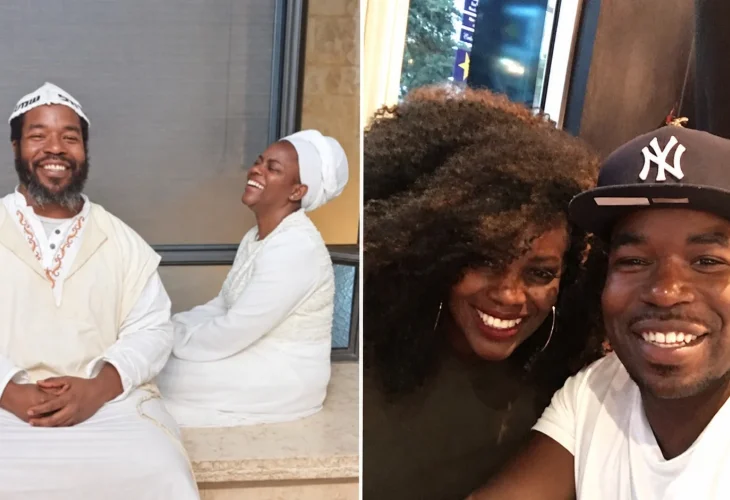
If you had told Matityahu Ben David as a child that one day he would be living in Tzfat as an observant Jew, it is hard to imagine that he would have known what to make of the idea.
Matityahu, then Matthew, grew up in Flint, Michigan, in an African American Baptist home in an underprivileged neighborhood. Judaism was so far removed from his world that he did not even know any Jews.
“I was never exposed to Jews or Judaism as a child,” he says. “I had never even seen a Jewish person in my life until I was much older.”
Sarah, then Cheryl, grew up on the other side of the country, in Philadelphia, in an African American family that belonged to the African Methodist Episcopal Church. Judaism was equally distant from her world, although, looking back, she can identify a small spark that was already there.
It began with the Jewish people she encountered in the Scriptures she studied in the New Testament. Even as a child, they stirred in her a curiosity she could not explain. She had no idea then that it would one day lead her toward an entirely new identity.
For Matityahu, the turning point came in perhaps the most unexpected place imaginable: Afghanistan. During his military service, after the base where he was stationed came under attack, he encountered a Jewish man from Jamaica who was praying – and discovered his deep knowledge of the Tanakh. “Up until then, my father had been the most knowledgeable person in Tanakh I had ever been around.”
The encounter stayed with him. After completing his military service, he went to college and decided to study Hebrew. The deeper he went, the more he began noticing what he perceived as discrepancies between the Christianity in which he had been raised and the Torah. Rather than turning away from those questions, he pursued them.
“Those discrepancies made me increasingly curious about Judaism,” he says.
“I Was in a Very Dark Place Spiritually”
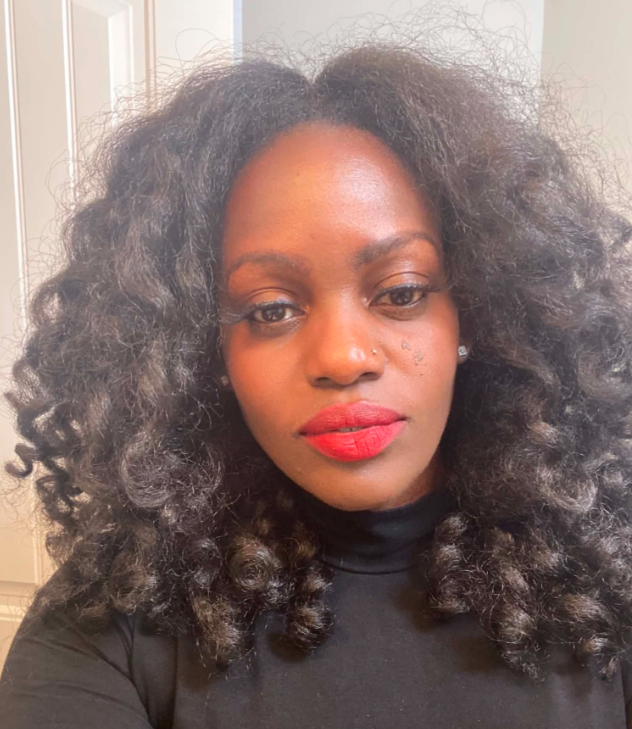
Sarah's journey was more complicated. When she and Matityahu reconnected about 11 years ago, he introduced her to the Torah and the Seven Noahide Laws. Her initial reaction was disappointment and fear.
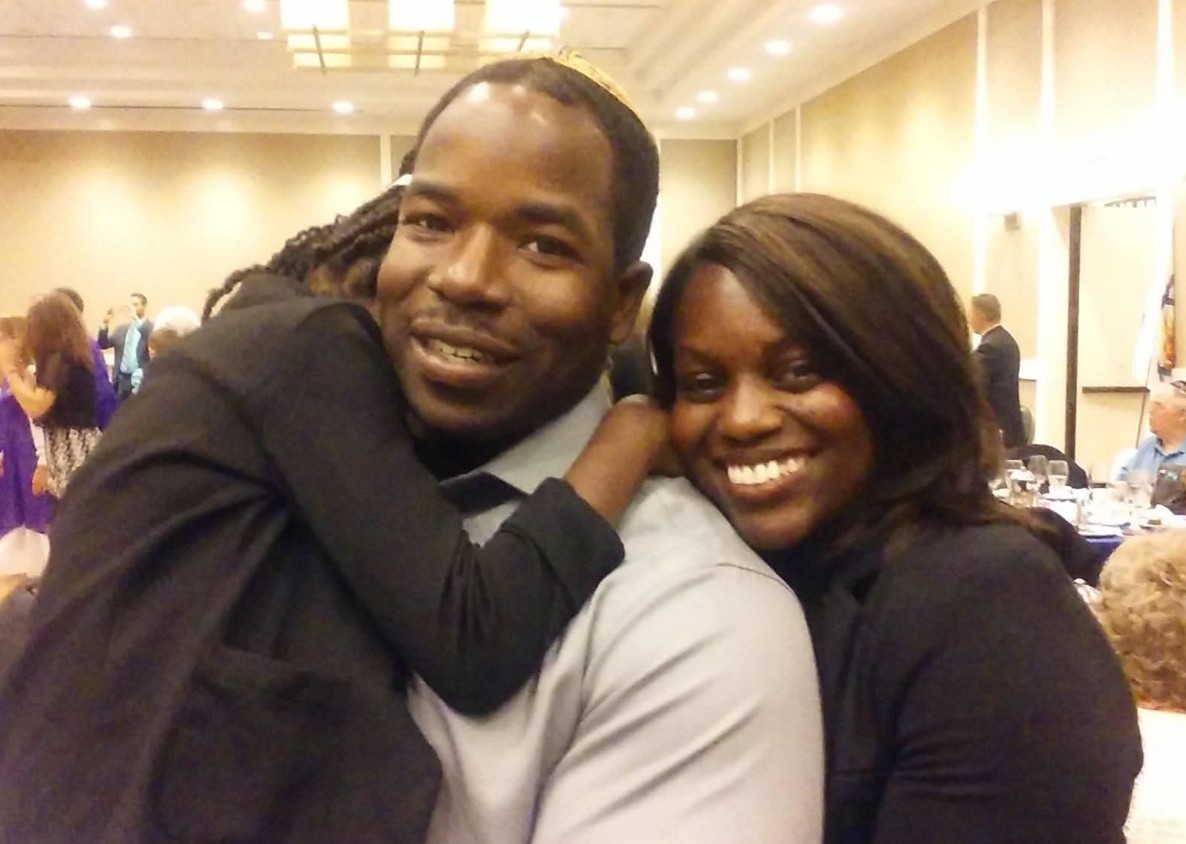
“Christianity was all I knew,” she admits. Yet even as Sarah was frightened by the direction Matityahu was taking, she could not ignore the changes she was seeing in him. The two had originally met while serving in the U.S. Navy aboard the USS Ronald Reagan.
“Don’t get me wrong, my husband always believed in God,” she says, “but on the ship, he was still pretty wild.”
When they reconnected years later, she encountered a different man. “I noticed that he had calmed down and that he was talking a lot about the Bible.”
Her spiritual search intensified during a difficult period of illness in 2019 and 2020.
“My husband and I went through several medical issues during 2019 and 2020. I had a cough, and later we found out that it was COVID. I had to be on a heart monitor because the doctors were concerned that something might be wrong with my heart. I also needed a walker because I was fainting.”
Matityahu introduced her to online Torah classes, where she discovered women who taught Torah, including Rebbetzin Miriam Yerushalmi and Rebbetzin Tamar Tabak. She also encountered Rabbi Alon Anava's personal story.
“It really ignited a greater fire in me to want to learn more about Judaism.” What had begun as curiosity was becoming something much deeper. Eventually, observing the Seven Noahide Laws was no longer enough. “I wanted more.”
Matityahu felt the same pull. Two Torah books he studied had a profound impact on him.
“Those books were so powerful for me,” he says. “They made me hungry for more. I no longer wanted to simply be a Noahide. I wanted to become Jewish.”
“I Love My Family, but I Love G-d First”
The closer they came to Judaism, however, the greater the personal cost became.
Matityahu's decision to leave Christianity was not easily accepted by everyone in his family.
“Some members of my family were even angry with me,” he says. “Some were hurt. Others welcomed the fact that I was becoming Jewish with open arms.”
For Sarah, the rupture was even more painful. Her relationships with close relatives gradually weakened until, she says, she is no longer in contact with members of her family today.
Could you elaborate a little more on the conflicts and emotional challenges you experienced as a result of becoming disconnected from your families?
Matityahu: “We were brought up strict. The main thing I learned from my family was to be tough and strict. It was never family first; it was G-d first. My father is a zealot when it comes to his faith, and I am too. Before I joined the Navy, my father told me that if anyone tells you something about G-d and they can’t back it up with Scripture, they shouldn’t be believed. It’s G-d first, family second.”
The principle Matityahu had learned from his father would ultimately strengthen him when his own study led him away from his family's religion.
“When the truth of Scripture was revealed to me, I came to believe that my family’s religion was wrong about G-d, and therefore those beliefs had to be rejected based on Scripture. Emotionally, it comes down to this: I love my family, but I love G-d first.”
Sarah: “For me, the severing from family was painful. But you have to understand what was happening. The person they had known me to be was changing into someone they no longer recognized. My husband lost his best friend, and we had to deal with that alone. When we had to move out of our home and downsize, we stayed with one of the few family members who accepted us and our beliefs, after another family member had put us out. When my husband needed emergency surgery, we dealt with that alone too.”
Yet through all of it, Sarah says, one thing remained constant.
“We always had Hashem, and that’s who we leaned on through every trial and every challenge. Through it all, all we had was Hashem. That made my resolve so strong once we fully committed to becoming Jews.”
Did the cost ever make them question whether they could continue?
Matityahu: “Absolutely not. It made me even hungrier and more zealous for Torah.”
Sarah: “No. If anything, having Hashem with us through it all made me want to come closer, to fight whatever I needed to fight and endure whatever I needed to endure in order to become a Jew. I wanted to show Hashem my deep appreciation for Him and for everything He had done for us. If anything, it made my resolve tough like flint.”
Every Door Seemed Closed
The resistance did not come only from their families. In the United States, the couple approached rabbis about conversion, only to find that the doors did not immediately open. For two people who had already become convinced that they wanted to join the Jewish people, repeatedly hearing “no” could easily have been the end of the road. Instead, they turned their frustration into fuel for further study.
Matityahu: “I decided I was going to buy every book I could find at Jumbo Judaica and read it. I decided to take as many classes as possible and dedicate about 18 hours of my day to learning.”
Between 2020 and 2024, he says, he read Midrash Rabbah; the Tanakh with commentaries several times; the Targumim, Onkelos and Yonatan ben Uziel; all of Rabbi Yitzchak Ginsburgh's books available in English; most of Rabbi Aryeh Kaplan's books in English; and many others.
“I decided that I was going to learn and educate myself so thoroughly that eventually they would have no choice but to let me in.”
Sarah threw herself into the process as well.
“The frustration we felt over what seemed like closed doors only made us more determined to learn, and then to learn even more. We channeled our frustration into Torah study and into going deeper and deeper into Judaism. We prayed a lot to Hashem to help us, and He did.”
A Medical Crisis on the Way to Israel
The couple's journey brought another major challenge in 2025, when Matityahu experienced a frightening medical emergency as they were preparing to move to Israel.
How did facing serious medical challenges while you were also undergoing such an enormous spiritual transformation affect your faith and your determination to continue?
Sarah: “Again, it took a lot of prayer and teshuvah to get through that period.”
By then, Matityahu was already in contact with Rabbi Alon Anava. Sarah says that Rabbi Anava and Rebbetzin Anava became an important source of support.
“We held on to the little strength we still had. I kept visualizing myself in Israel and thanking Hashem for it.”
Israel became something Sarah could hold on to long before she physically arrived. In September 2025, that vision finally became reality.
“We finally set foot on the soil of Israel. Since then, I haven’t looked back.”
Starting Over in Tzfat
Getting to Israel required more than buying plane tickets. The couple sold their belongings, put what remained into storage and left the United States behind.
“We moved to Israel with the hope and determination that we would become Jewish, no matter how difficult the challenges might be,” Matityahu says.
They settled in Tzfat, a city Matityahu had first encountered through Rabbi Alon Anava's classes. He was immediately captivated.
“I just fell in love with the city,” he says. “I told my wife, ‘This is where we’re moving.’”
Sarah felt an equally powerful connection.
“I feel that Hashem truly thought about me and my family, and that is why He brought us to Tzfat. I always say that Israel is the happiest place on earth, not Disneyland.”
She especially loves walking through the streets of Tzfat on Friday night, when the businesses are closed and the sounds of prayer and singing rise from the synagogues.
“You can really feel Shabbat here,” she says.
But arriving in Israel did not mean the challenges were over. Years of study now had to become a way of life, and the couple faced the practical realities of learning halachah and living as Jews.
For Sarah, the sheer amount there was to learn was initially intimidating.
“How am I going to remember what I need to do? There is so much to learn and know,” she remembers thinking.
Eventually, however, she began to see the endlessness of Jewish learning not as something frightening, but as one of the gifts of the life she was choosing.
“I decided that, God willing, I would spend the rest of my life learning. That thought still excites me today, because learning keeps you alive in the right way, with the right enthusiasm.”
“I Had a Soldier’s Mentality”
For Matityahu, one of the most challenging moments of the conversion process was undergoing circumcision as an adult. Once again, he drew on his military past, approaching the experience almost as another mission that had to be completed.
“I had a soldier’s mentality, and I knew I had to charge into the mission with everything I had. So that’s what I did.”
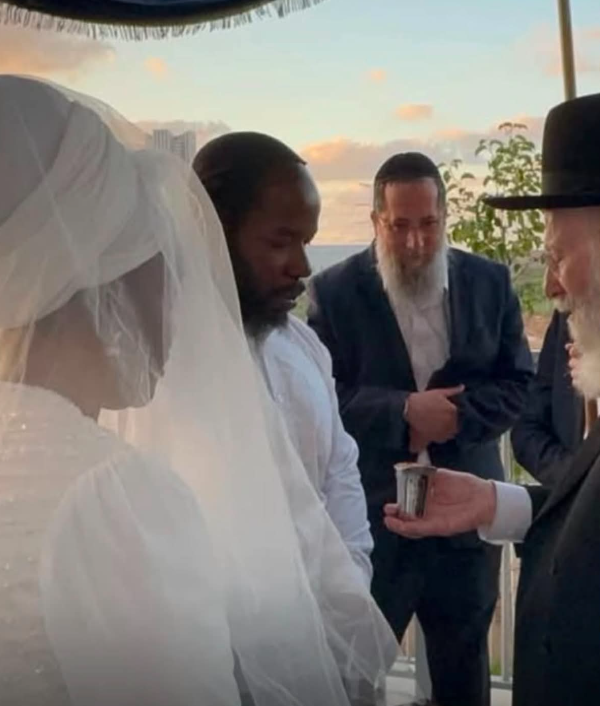
On July 8, 2026, the day they had spent years preparing for finally arrived. Matityahu and Sarah completed their Orthodox conversion.
Before entering the mikvah, Sarah was nervous, but alongside the nervousness came an unexpected sense of peace. She understood that the moment represented far more than a personal spiritual milestone.
“I began to understand that this was an enormous step I was taking, not only for myself but for the future generations of my family.”
She was filled with gratitude and humility.
“Hashem wants me close to Him, and that is why He gave me the privilege of becoming Jewish.”
For a woman who had spent years searching for spiritual clarity and a place where she truly belonged, the moment carried the weight of everything that had come before: Christianity, uncertainty, illness, Torah study, family conflict, closed doors, the move to Israel and the long conversion process.
Then she immersed.
“The experience after the immersion was surreal. I felt as though my soul had finally filled my body. Only then did I truly feel that I belonged.”
Then came the tears.
“I felt that I had finally come home, both to myself and to the Jewish people,” Sarah recalls.
But the mikvah was not a finish line.
“I didn’t feel that my conversion journey ended the day after the mikvah. If anything, I felt that it had only just begun.”
That same day, another significant chapter began: Matityahu and Sarah were married again, this time as Jews.
“After Everything I Went Through, It Hurts”
Completing the conversion did not mean that the spiritual challenges suddenly disappeared.
Matityahu points to one very ordinary struggle.
“Now the yetzer hara makes itself very noticeable in the morning when it’s time to get up early for prayer. I’m working on getting myself to three minyanim a day, whether I feel like it or not.”
But another struggle has proved more painful. After everything he went through to become Jewish, Matityahu says that there are still moments when he feels that certain people look at him as though he does not belong.
“I’m tired of certain people looking at me that way, as though I don’t belong, after the long journey I went through to get here. It hurts,” he says. “It shouldn’t be like that. The focus should be on Hashem, not on people you’ve never met or spoken to personally.”
Sarah approaches the issue somewhat differently. She is conscious of the enormous amount she still has to learn, but she refuses to allow that awareness, or the reactions of others, to make her question her Jewish identity.
“I’m aware that Jews who were born into this world grew up with the Torah and mitzvot that I’m only now beginning to learn, and I respect that,” she says. “But I’m also secure in my place. I know that I, too, as a convert, have a place and a role within the Jewish people. Because of that, I don’t think anyone can make me feel less Jewish.”
“All my life, I searched for meaning and for a closer, deeper connection with God. My past is still part of me, but Judaism has given me a deeper sense of purpose, responsibility, faith and belonging, and above all, a home for the spiritual identity I had been searching for all these years.”
Finally, I ask them who found whom. Did they find Judaism, or did Judaism find them?
“Judaism found me. I wasn’t looking for it. It simply kept appearing again and again everywhere I went,” Matityahu says.
Sarah sees it as both.
“I found Judaism, but in many ways, I feel that Judaism chose me too. All my life, I felt that I was on a long journey and that I never truly fit in anywhere.
“It was only when I converted that I felt I had finally come home.”

