

Facts You Didn't Know
Why Do Pine Cones Open and Close? The Surprising Science Behind Their Movement
Discover how pine cones respond to water and humidity, why they can move without living cells, and how a simple experiment at home reveals one of nature’s most fascinating mechanisms
- Shira Dabush
- | Updated
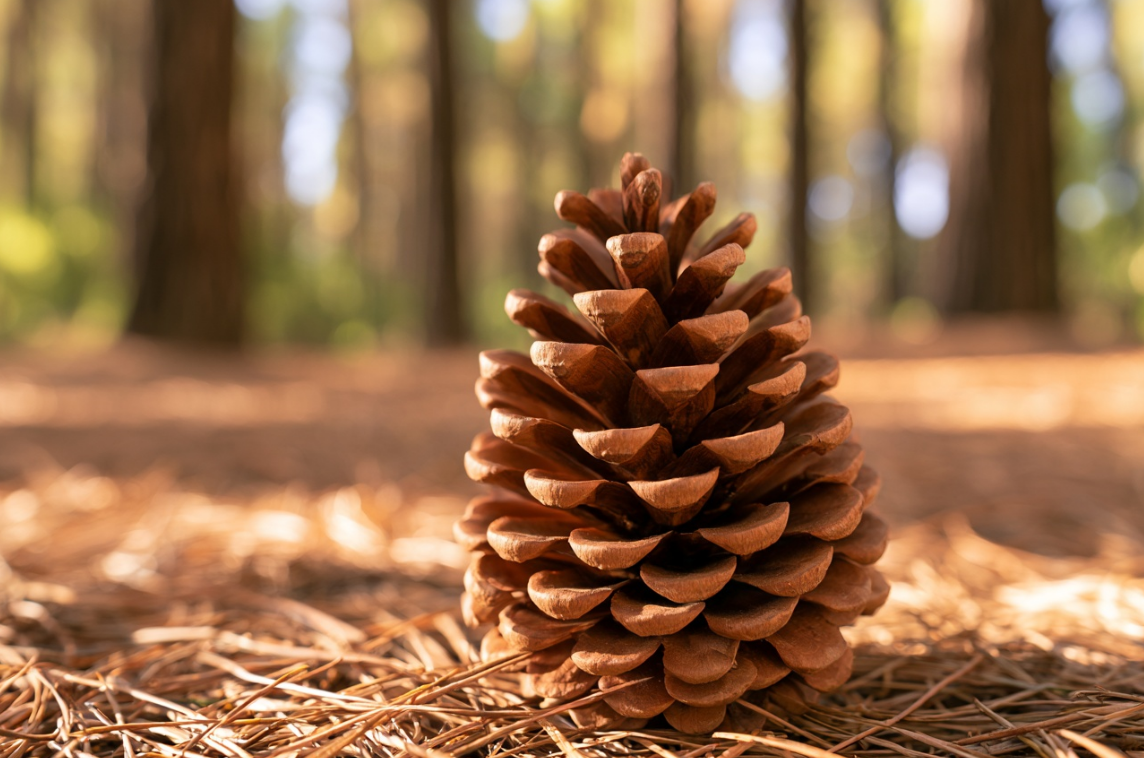
Have you ever picked up an open pine cone from the ground, placed it in a bowl of water, and watched its scales gradually close? It's one of nature's fascinating wonders, revealing the remarkable sophistication of the Creator's design. Even after a pine cone has fallen from its tree, it can open when dry and close when wet. How can something that is no longer alive continue to move, and why does it respond to moisture in this particular way?
Scientists have studied this phenomenon for years, and the explanation lies in the unique structure of the pine cone itself. In many mature pine cones, the scales spread apart in dry conditions and close when exposed to moisture. Surprisingly, this movement is not directly controlled by sunlight or darkness, but by the amount of water absorbed by the tissues. Warm weather can accelerate drying, which explains why pine cones sometimes appear to open in response to sunshine. In reality, as the cone loses moisture, its scales bend outward. When they absorb water, they bend inward and move closer together.
The Science Behind a Pine Cone's Movement
The mechanism is particularly remarkable because pine cone scales are made of rigid materials with different structural properties. The tissues within each scale do not expand and contract equally when their moisture content changes. This difference causes the scales to bend in a process scientists call a hygroscopic response, which is movement triggered by the absorption or release of moisture. Research has shown that several factors influence this movement, including the orientation of fibers within the scales, the ability of different tissues to absorb water, and their mechanical properties.
Perhaps the most surprising aspect of this phenomenon is that the movement of a mature pine cone does not require living cells. Although the cells within mature pine cone scales are no longer alive, their cell walls and structural materials continue to respond to moisture. As water enters or leaves these tissues, the resulting expansion and contraction produce movement.
This explains why even a pine cone that has fallen from its tree can repeatedly open and close. It does not need an active biological system to power the process. Instead, the movement is driven by the physical changes that occur when its materials become wet or dry. The result is an extraordinary natural mechanism that continues to function long after the cone has stopped receiving nourishment from the tree.
A Simple Experiment You Can Try at Home
You can observe this fascinating process with an easy experiment. Find a mature, fully open pine cone that has fallen to the ground. Take a photograph of it, then place it in a bowl of room-temperature water. Check it periodically, photographing it from the same angle to observe the changes.
Over the next several hours, you may notice the scales gradually moving closer together. The speed and extent of the movement can vary depending on the type of pine cone and its condition. Once the scales have closed, remove the pine cone from the water and place it in a well-ventilated area to dry. As the moisture evaporates, the scales should gradually spread apart again.
This simple experiment demonstrates how changes in moisture can produce movement in natural materials, even without living cells.
Five More Fascinating Facts About Pine Cones
1. Pine trees produce male and female cones. Male cones produce pollen, while female cones contain ovules that can develop into seeds after fertilization.
2. Pine nuts are seeds, not botanical fruits. Unlike apples or tomatoes, pine trees belong to a group of plants known as gymnosperms, meaning their seeds are not enclosed within a fruit.
3. Not every pine cone contains edible pine nuts. Pine nuts are harvested from certain species of pine trees, including the stone pine. The cones you find outdoors do not necessarily contain seeds suitable for eating.
4. Pine cones can take years to mature. Their development varies by species. Stone pine cones, for example, typically mature during their third year.
5. Some pine cones remain sealed until exposed to intense heat. In certain pine species, resin holds the cones closed until high temperatures, sometimes associated with wildfires, cause the resin to release. Once the resin softens, the scales can open as conditions permit, helping disperse the seeds.
The next time you notice a pine cone on the ground, take a closer look. What appears to be a simple, lifeless object is actually an extraordinary example of natural engineering, with a structure capable of responding to environmental changes long after it has fallen from the tree.
 Wonders of CreationHow Trees Water the Soil: The Amazing Science of Hydraulic Lift
 Facts You Didn't Know5 Fascinating Ways Trees Communicate With Each Other
 Wonders of CreationDo Flies See in Slow Motion? What Science Says
 Facts You Didn't KnowCatatumbo Lightning: The World's Most Intense Lightning Storm Explained

